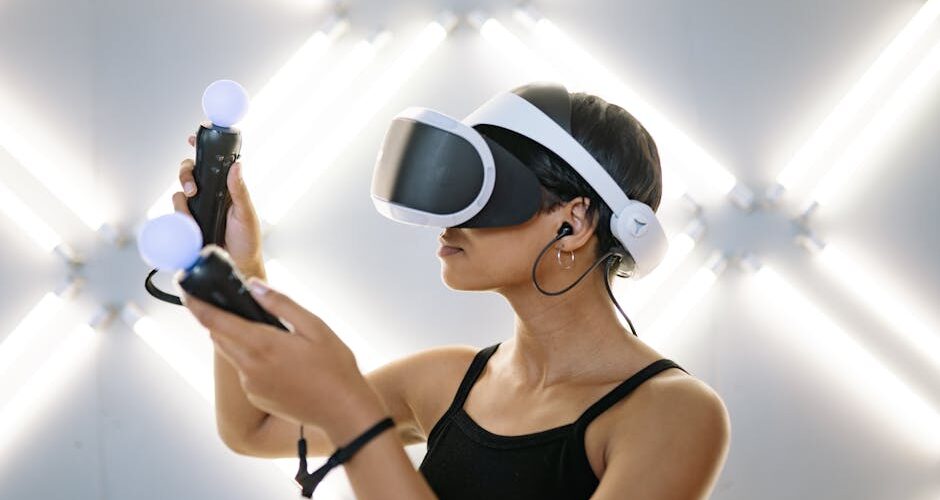
5 Reasons Why Virtual Reality Gaming is the Future
The year is 2026, and virtual reality has firmly established itself as a cornerstone in the realm of gaming. Gamers worldwide have embraced the technology, and industry analysts continue to predict its explosive growth. But what makes virtual reality (VR) gaming particularly promising? Here, we delve into five compelling reasons why VR gaming is not just a passing trend but indeed the future.
Immersive Experiences Beyond Imagination
The allure of virtual reality lies in its ability to transport players to entirely different worlds, far removed from the confines of their living rooms. In 2026, VR headsets like the Meta Quest 5 and the Valve Index 3 have pushed the boundaries of immersion to new heights. These devices offer ultra-high-resolution displays and impeccable spatial audio, creating a sensory experience that feels palpably real.
For instance, games like Horizon VR: Call of the Mountain allow players to scale virtual peaks with their own hands, while Half-Life: Alyx VR places them at the heart of a gripping, interactive narrative. The level of immersion offered by these games is unprecedented, making players feel as if they are truly part of the game world. This level of engagement is increasingly becoming the norm, setting a new standard that traditional gaming simply can’t match.
Expanding Accessibility and Affordability
In the early days of VR, concerns about cost and accessibility were prevalent. However, as with many technologies, prices have dropped significantly, and more people can now access VR gaming. By 2026, entry-level VR setups are available for under $200, thanks to the widespread availability of lightweight, standalone devices.
Moreover, global initiatives have focused on improving internet connectivity, even in remote areas, making it easier for a broader audience to participate in VR gaming. Game developers have also prioritized creating inclusive content that accommodates players of all abilities, further broadening the accessibility of VR.
Social Connectivity in Virtual Worlds
Contrary to the misconception that VR gaming is an isolating activity, it has actually revolutionized social interaction. Platforms like VRChat and Rec Room have become vibrant hubs for socializing, allowing people to interact, play games, and build communities regardless of geographical boundaries.
These virtual spaces are not just about playing games; they’ve become venues for concerts, art exhibits, and even virtual conferences. In fact, according to a 2026 report by Statista, over 70 million users actively engage in social VR platforms monthly. The ability to meet and connect with others in immersive environments has transformed how people perceive and engage in online social interactions.
Advancements in Realism and Interactivity
Technological advancements have played a crucial role in enhancing the realism and interactivity of VR gaming. The integration of haptic feedback gloves and full-body tracking suits allows players to experience tactile sensations and natural body movements within the game. This level of interactivity makes the gaming experience more realistic and engaging.
Consider the impact of these advancements in games like Boneworks 2, where players can feel the tension of pulling back a bowstring or the recoil of a firearm, adding a new layer of depth to the gaming experience. Artificial intelligence (AI) has also been incorporated to create more responsive and intelligent non-player characters (NPCs), enriching the narrative and enhancing the player’s sense of agency.
An Ever-Expanding Universe of Content
The VR gaming industry has seen an explosion in content diversity, catering to a wide range of interests and preferences. Developers have harnessed the unique capabilities of VR to create experiences that go beyond traditional gaming genres. From educational simulations that allow students to explore ancient civilizations in Time Traveler: Ancient Greece, to fitness-focused games like Supernatural VR that make workouts fun and engaging, the variety of available content is staggering.
Moreover, the rise of user-generated content has further enriched the VR landscape. Platforms such as Dreams VR empower players to create and share their own virtual experiences, resulting in a constantly evolving and expanding universe of content.
Practical Takeaway
In 2026, it’s clear that virtual reality gaming is no longer just a novelty—it is an integral part of the gaming ecosystem. As technology continues to evolve and become more accessible, VR gaming will likely play an increasingly prominent role in how we experience interactive entertainment. For gamers, developers, and tech enthusiasts alike, now is an exciting time to embrace the potential of virtual reality as it continues to shape the future of gaming.